Liquid CO₂: why biogas is becoming a two-product industry
Every biogas upgrader splits raw biogas into two streams: biomethane and a CO₂-rich off-gas that many plants still vent today. For years, venting made sense. Fossil supply was readily available, and buyers paid little or no premium for the biogenic alternative. Neither assumption holds any longer.
Fossil CO₂ supply is less secure than it looks
In many markets, the CO₂ used in food, beverage and horticulture is not produced on purpose. It is recovered as a by-product, mainly from ammonia and ethanol plants in Europe and North America. Its availability therefore depends on the economics and maintenance schedules of industries with other priorities.
When energy prices rise and those plants cut output, supply can tighten within weeks. Shortages in Europe in 2021 and 2022 disrupted food and beverage production, and US brewers faced their own shortage in 2022. For many buyers, it showed how little control they have over a critical input.
More buyers are now looking to contract bioCO₂, partly for their sustainability targets but increasingly to secure supply. A biogas plant, by contrast, delivers a steady stream around the clock, independent of ammonia or ethanol markets, and is often located close to the end users who need it.
Carbon intensity is changing how projects are valued
Regulation is pushing in the same direction. In markets where carbon intensity (CI) determines the value of biomethane, a project’s greenhouse-gas performance can matter as much as the volume of gas injected. In the EU, for example, the revised Renewable Energy Directive (RED III) lets biomethane producers claim an emissions saving when their biogenic CO₂ replaces the fossil equivalent in commercial products. The provision runs until 1 January 2036.
That changes the investment case for liquefaction. It is no longer just sales revenue minus operating cost. Where the CI methodology recognises the saving, a liquefaction unit can earn twice: from the product you sell and from a lower CI score for the biomethane you produce.
Liquefaction also improves methane recovery. Installed downstream of the upgrader, it separates the non-condensable gases and returns them to the process, recovering methane that would otherwise leave with the off-gas. Combined with a Bright biogas upgrader, methane recovery can reach up to 99%.
What it takes to produce food-grade liquid CO₂
Venting CO₂ costs nothing; selling it takes engineering. Food and beverage buyers require a product that meets food-grade specifications on purity and impurities, backed by quality control and documentation. Wabico, HoSt Group’s own RNG plant in the Netherlands, produces liquid bioCO₂ with our technology and has achieved FSSC 22000 food safety certification.
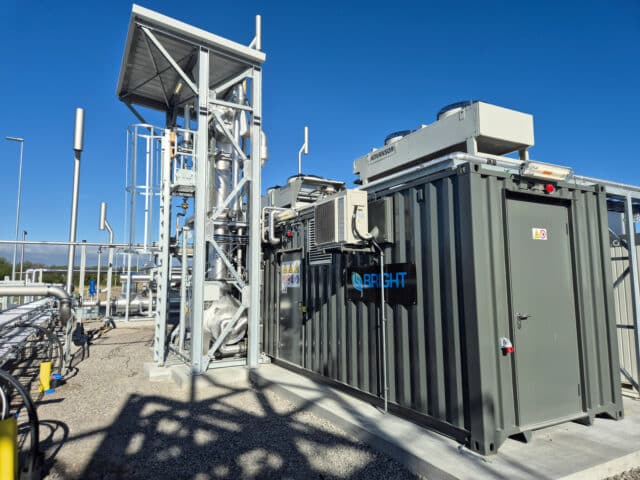
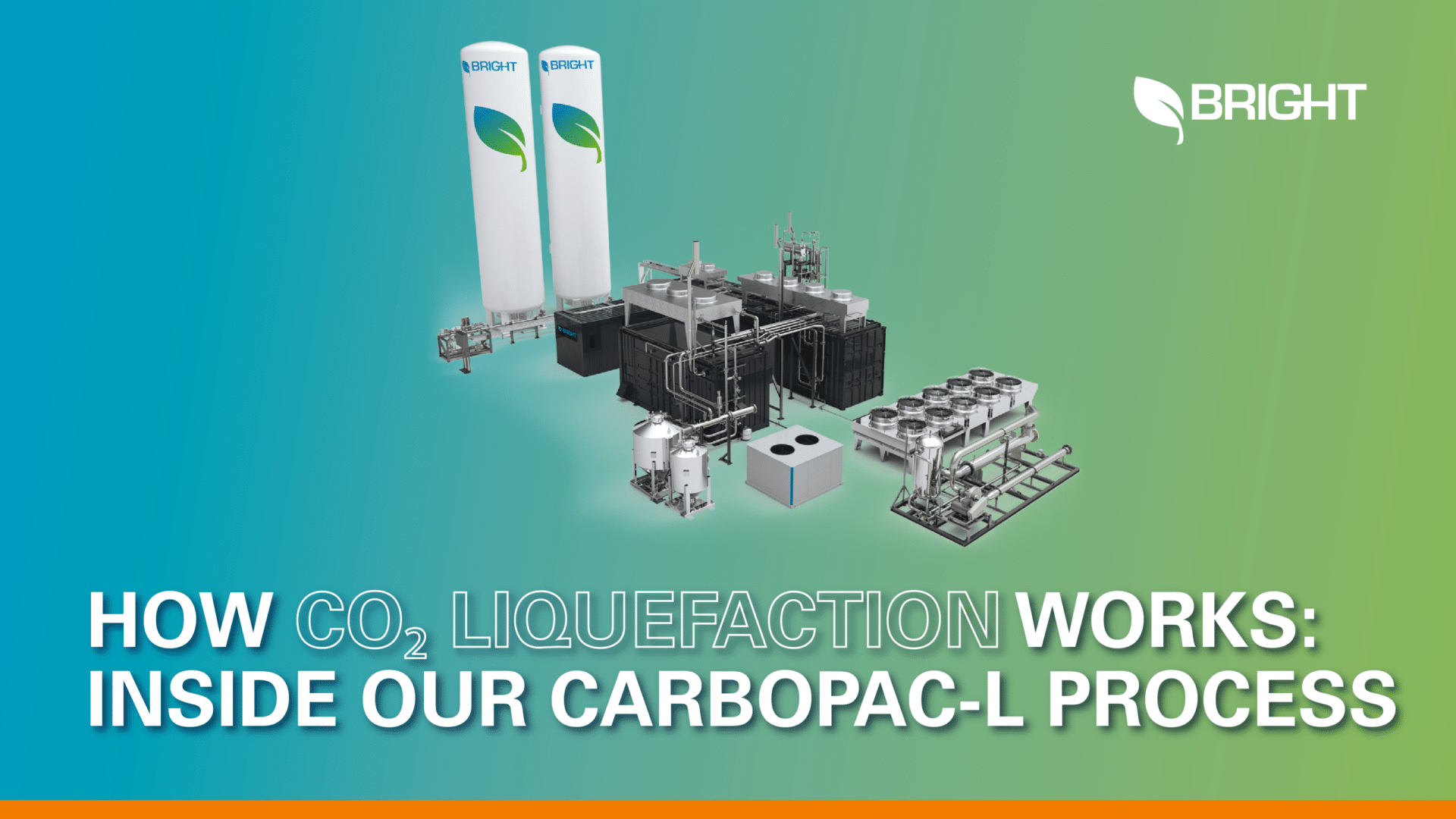
We designed our CarboPac-L CO₂ liquefaction system around those requirements. The off-gas is filtered through activated carbon, compressed in two oil-free stages to 18.3 bar, dried to a dew point of −50 °C and condensed at −22 °C. Non-condensable gases are removed in the stripping column to help secure food-grade quality. Product quality and dissolved methane are monitored continuously, with automatic shut-off and remote access, so our local and remote service teams can support the plant 24/7.
The system uses CO₂ itself (R744) as a natural refrigerant, so no synthetic refrigerants or ammonia are needed in the liquefaction process. Heat from the liquefier compressor can also be recovered.
CarboPac-L is containerised for plug-and-play installation and comes in three models, from 600 to 6,000 kg per hour. As an add-on to biogas upgraders and carbon capture systems, it suits new projects and can be retrofitted to existing plants. At many operating plants, the raw material for this second product is already there; it is simply not being captured yet.
Our three-minute process animation below shows each step, from off-gas to storage tank.
How CO2 Liquefaction Works: Inside Bright Renewables' CarboPac L Process
Early movers are best placed to secure bioCO₂ offtake
Biomethane rewarded early movers with grid connections and long-term offtake agreements while others were still burning gas in engines. Biogenic CO₂ looks set to follow the same path. As buyers in food and beverage, horticulture and refrigeration explore alternative sources of supply, producers that can deliver food-grade liquid bioCO₂ at the required quality, volume and price will be best positioned to secure long-term offtake agreements. Plants that start capturing now will be first in line when those contracts are signed.
Operating or developing biogas upgrading capacity? Our team can assess what liquefaction could deliver for your plant and your CI score. Fill out the form below to request information.