Food-grade CO2: the next step for biomethane plants
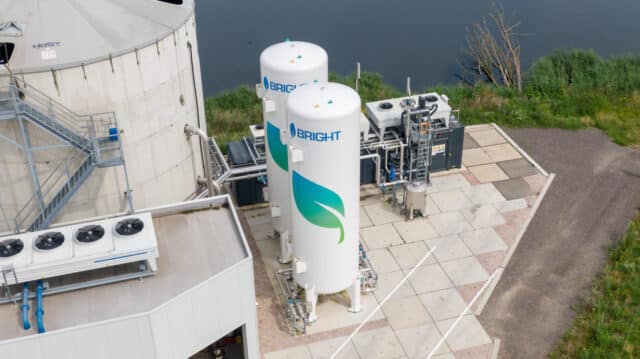
WABICO, HoSt Group's biomethane plant in Waalwijk, has officially achieved FSSC 22000 certification, one of the most rigorous food safety standards in the world. It is a significant milestone for everyone involved, including Bright Renewables, which is part of HoSt Group. For biomethane producers across the sector, it demonstrates where the market is heading and what a food-grade CO₂ product makes possible.
CO₂ recovery is becoming standard
Not so long ago, CO₂ capture and liquefaction was something you might add to a biomethane plant later. Today, above a production threshold of around 8,000 tonnes of CO₂ per year, it is increasingly designed into the plant from the outset.
The CO₂ itself has commercial value. The greater benefit, however, lies in the Carbon Intensity (CI) score of the Guarantees of Origin that a plant issues. Capturing and reusing CO₂ can lower that score by approximately 40 g CO₂/MJ. Because a lower CI score means a more valuable certificate, that improvement directly strengthens the business case.
There is one important condition. The CI improvement only counts if the CO₂ captured on site is actually utilised. In other words, the CO₂ needs a buyer.
Food-grade is now the entry ticket
Where does this CO₂ go? It has many applications, but demand is strongest in food and beverage, and that is precisely where offtakers want to be able to use it. This is why almost every customer we speak to now asks the same question: can we prove our CO₂ is food-grade? What was once a welcome addition has become a basic market requirement.
The answer to that question is FSSC 22000, and it is often misunderstood. FSSC 22000 is not a quality certificate but a food safety certification. It proves that your operation is, in every formal sense, eligible to produce food. That means a full Food Safety Management System, a Food Safety Team, a Food Safety Culture Plan and every other requirement that shows the right systems are in place and working. For a biomethane plant, that is a new discipline alongside running a digester and an upgrading unit.
An opportunity for the whole CO₂ market
This development creates opportunities for producers and offtakers alike. Biomethane plants are giving the CO₂ market something it has never really had: distributed sourcing of biogenic CO₂.
Today, the vast majority of CO₂ comes from conventional ammonia production. Natural gas is both the feedstock and the main energy source for that process, typically making up 70 to 85% of the total production cost. In the current geopolitical climate, that leaves both price and security of supply on uncertain ground. Biogenic CO₂ from a network of biomethane plants gives offtakers another option: more diverse sourcing, and far less dependence on natural gas.
At present, bioCO₂ still has to compete with fossil CO₂ on price. However, we expect this to change, and that biogenic CO₂ will increasingly be valued as a premium product in its own right. The producers who can already deliver food-grade CO₂ will be ready when it does.
Why we tested it on our own plant
As a technology provider, we did not need to certify our own plant. However, we are in the unique position of operating one. WABICO gave us the opportunity to experience first-hand what our clients go through to prove their CO₂ is food-grade: the procedures, the obstacles and the practical challenges along the way. We now know them from the inside.
That changes the conversations we have with our customers. To our knowledge, we are the only technology provider that has completed the same certification process as its clients. When you work with Bright Renewables, you gain more than technology: you gain a partner that has already completed the process you are about to begin.
We have also translated that experience into a practical risk assessment and hazard analysis template that can be integrated directly into your own FSSC 22000 system.
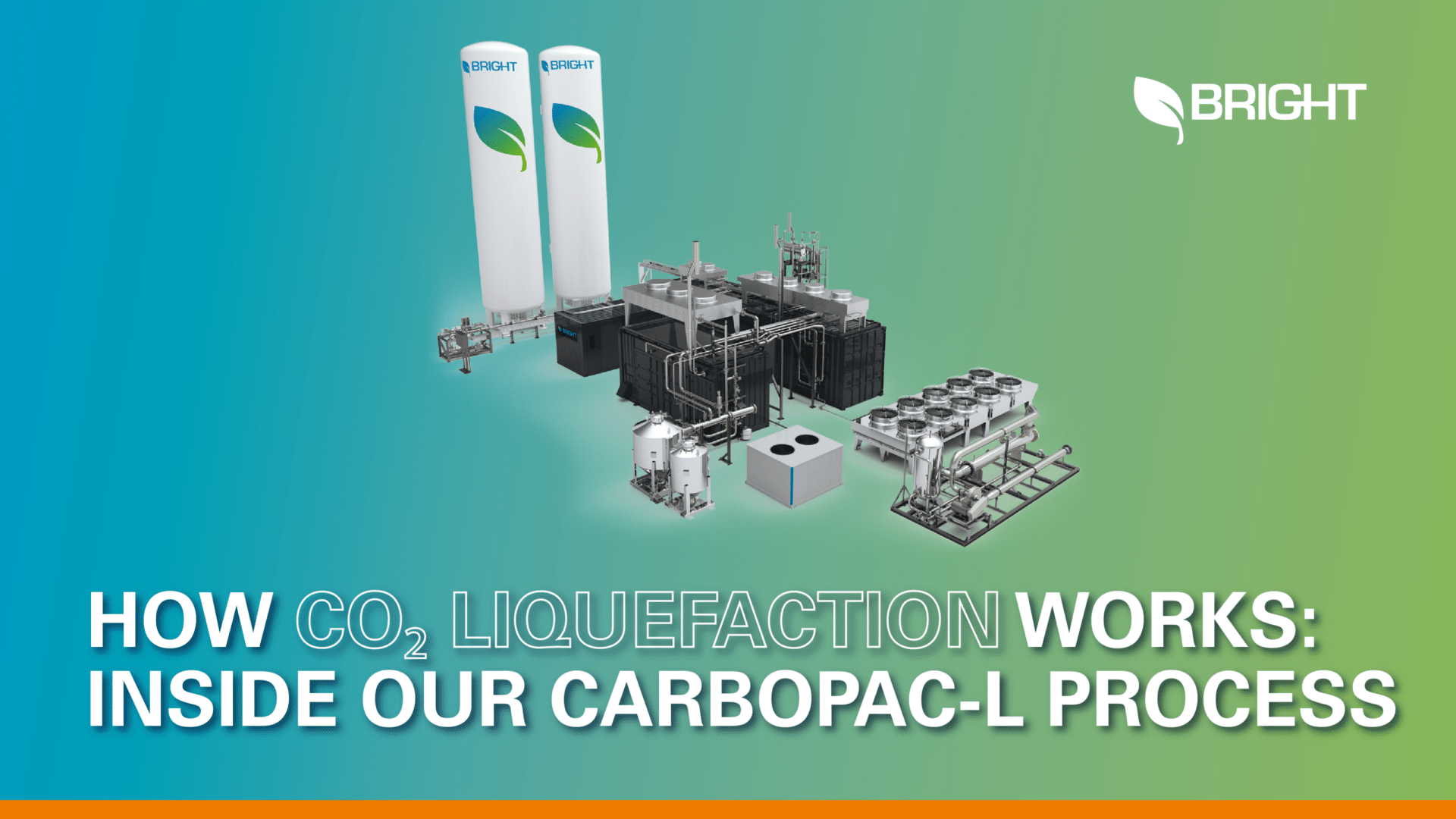
Learn how CO2 Liquefaction works: watch the video for the Carbopc-L process
Talk to us about food-grade CO₂
The market for biogenic CO₂ is opening up, and food-grade certification is the key to it. WABICO has shown it can be done. If you are planning CO₂ recovery at your plant or want to turn the CO₂ you already capture into a certified product that sells, we would be pleased to discuss the possibilities. Contact our team.
"*" indicates required fields