SAS Noyant Bio Energies officially inaugurated in Noyant-Villages, France
The inauguration marks a proud moment for SAS Noyant Bio Energies, for the 19 farms behind the project and for everyone who worked to bring it to life. Located in the department of Maine-et-Loire, the plant keeps value, energy and materials within the local community.
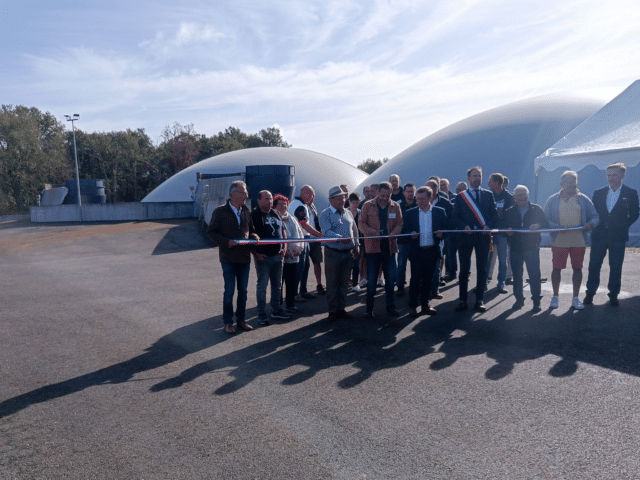
From local farms to the French gas grid
The plant is built around a partnership of 19 farms in the region, which supply the agricultural feedstock that powers the digester. This includes strawy manure, slurry, treated straw, cereal residues and rye silage: materials that are available locally and would otherwise have limited value. Two hoppers feed the solid feedstock into the digester automatically and continuously, ensuring a stable process and steady gas production.
Construction started in July 2023, and the plant was commissioned in July 2024.
Making every cubic metre count
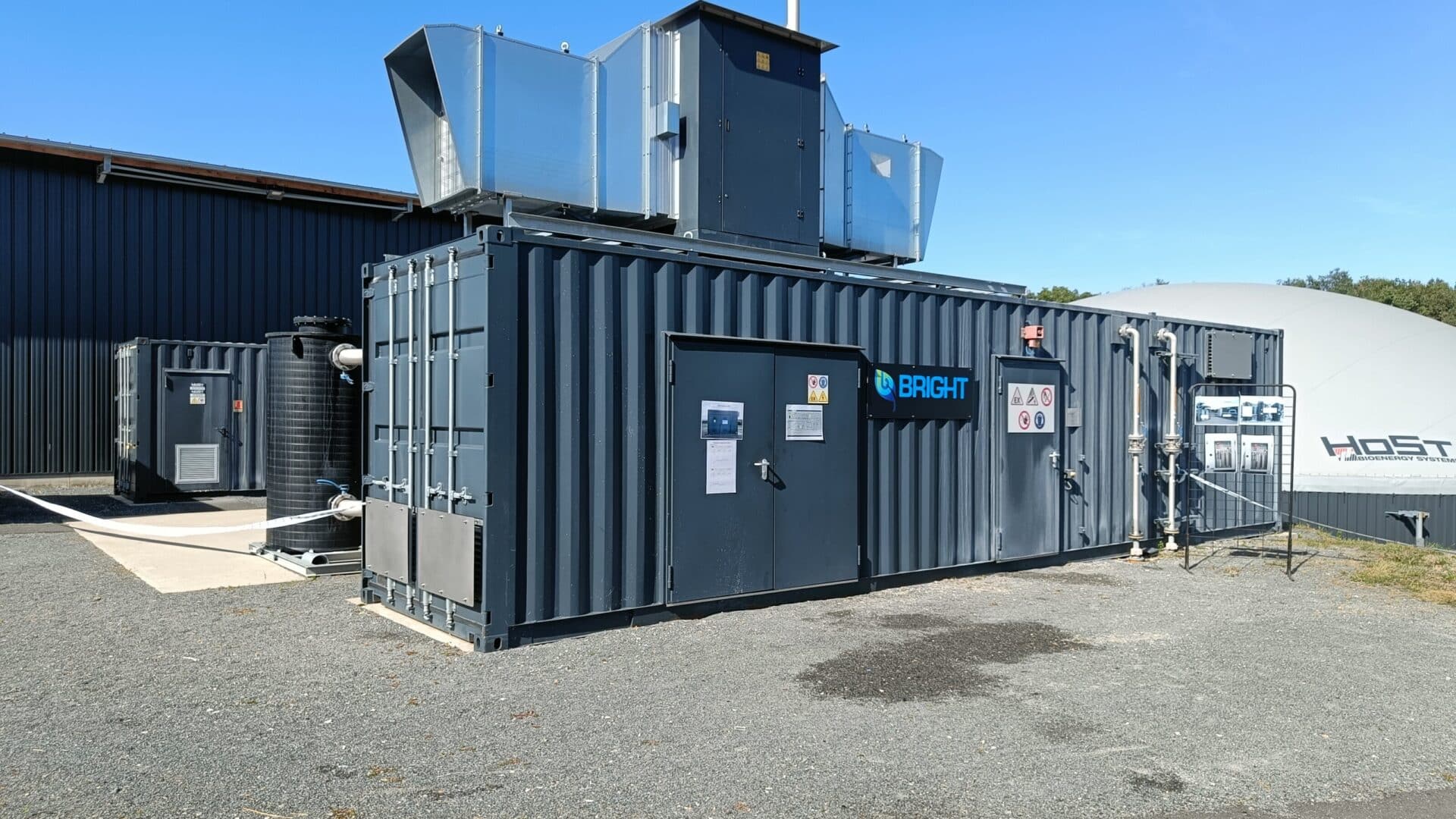
At the heart of the plant is our membrane biogas upgrading system.
The system is designed to process 400 Nm³/h of biogas, upgrading it into biomethane at a methane concentration of 97%. Crucially, it recovers 99.5% of the methane in the biogas. This matters for two reasons. First, every cubic metre of methane that is recovered is a cubic metre of renewable gas that can be sold, which directly supports the plant’s business case. Second, methane that is not recovered is lost in the off-gas, and methane is a potent greenhouse gas. By recovering nearly all of it, the plant keeps these emissions to a minimum.
Over a full year, the plant produces around 1.37 million Nm³ of biomethane, enough to supply more than 1,200 households.
Heat from within the process
Biogas plants need heat to keep their digesters at the right temperature. Many plants use part of their own biogas to generate that heat, which means less gas is available for upgrading and sale. At Noyant, this is not the case.
Instead, the plant recovers heat from within the process itself: from the upgrader’s compressor, from the biogas and from the digestate as it is transferred to storage. Together, these sources provide the heat the digester needs, so all of the biogas can be upgraded into biomethane. A boiler is available as backup only, for starting up the plant, for periods of extreme cold or for a future expansion.
More than renewable gas
SAS Noyant Bio Energies shows what biogas upgrading can deliver when every part of the process is put to work: locally sourced feedstock, near-complete methane recovery and heat recovered from within the plant itself. It is a practical example of a circular energy system, built by and for the local community.
Congratulations to SAS Noyant BioEnergies on this milestone and thank you to our colleagues at HoSt Bioenergy Systems and everyone involved in bringing this project to life.