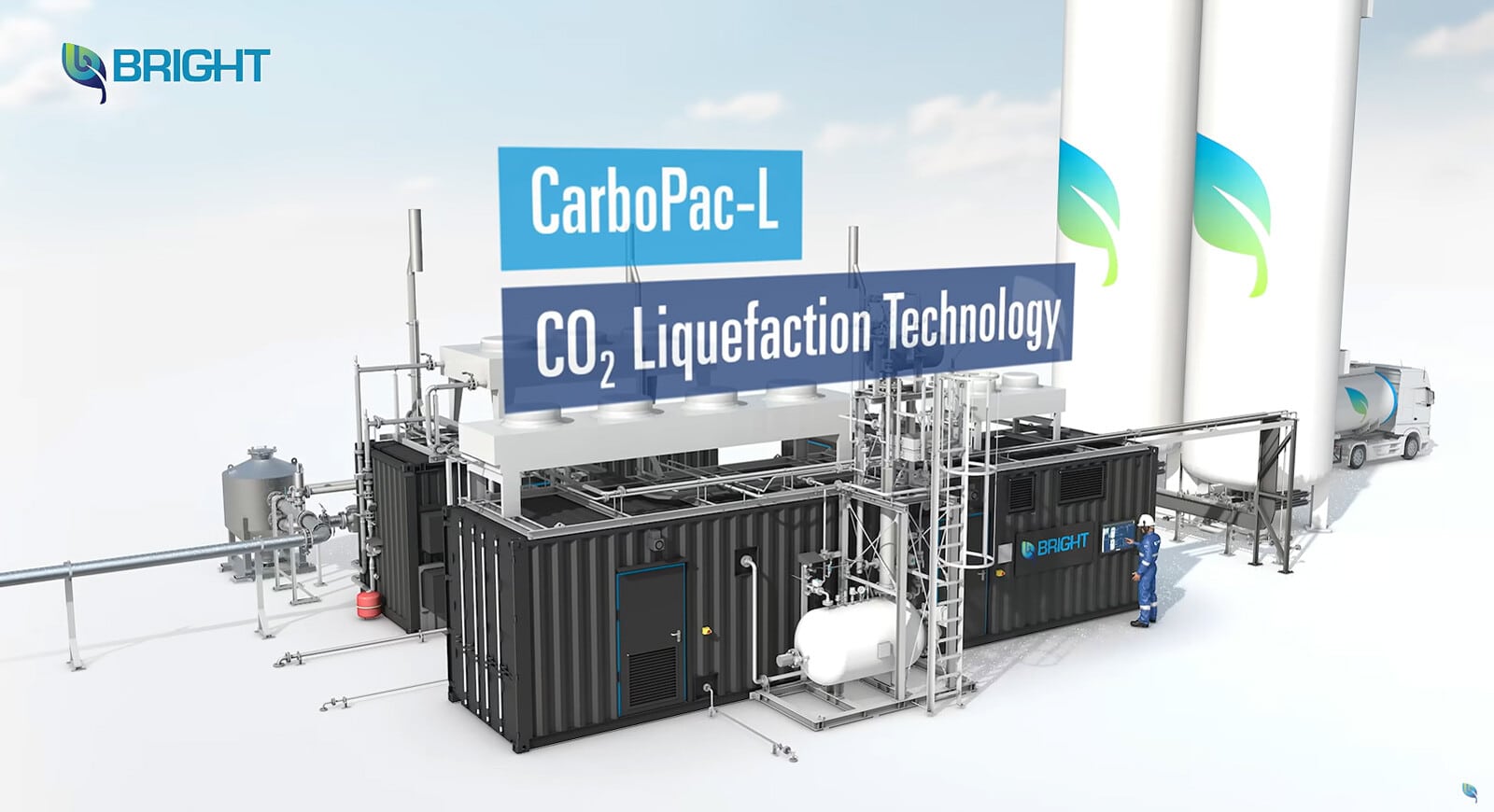
CarboPac-L CO2 Liquefaction for RNG Plants
Our CO2 liquefaction systems range
CarboPac-L Compact

CarboPac-L Medium

CarboPac-L Grand
Key features & benefits
- Biogenic alternative to fossil CO2 from ammonia plants
- Helps lower your project’s carbon intensity (CI) score
- Local, reliable CO2 supply for nearby buyers
- A second revenue stream from the same biogas
- CO2 as a natural refrigerant, with no Freon or ammonia
- Food-grade purity, proven at an FSSC 22000-certified plant
- Compact, modular, containerized design
- Heat recovery from the liquefier compressor
Product specifications
How it works

CO2 recovery
Bright’s CO2 liquefaction technology recovers the CO2 from the biogas upgrading process or from the carbon capture process and converts it into liquid bioCO2. It stands out by using CO2 as a refrigerant, avoiding Freon or ammonia. Designed as a containerized, plug-and-play solution, it ensures swift on-site installation and startup. This technology is an essential add-on for biogas upgraders or carbon capture systems.
Lower your carbon intensity score
Adding a CO2 liquefaction step in the process, results in an improvement in sustainability, revenue, and CI score. A CI score measures the amount of carbon dioxide (CO2) emissions produced per unit of energy or fuel consumed. It is a critical metric used to assess the environmental impact of various energy sources. A lower CI score indicates a lower amount of CO2 emissions associated with the energy produced, signifying a cleaner, more sustainable energy source. Adding a CO2 liquefaction system to a biogas upgrading plant significantly improves the project’s carbon intensity (CI) score by capturing and repurposing CO2.
BioCO2 from sludge
Bright Renewables built the biogas upgrading and CO2 liquefaction system at Waterschap de Dommel’s wastewater treatment facility in Tilburg, Netherlands. This innovative project transforms sludge into renewable natural gas and food-grade liquid bio-CO2, cutting carbon emissions and enhancing the CI score. Producing enough RNG to power 7,000 households annually and 500 tons of eco-friendly liquid bio-CO2 monthly, it sets a benchmark for sustainable operations at the Dutch facility.


Food-grade liquid CO2 utilization
Implementing a CO2 liquefier creates additional revenue opportunities through the sale of liquid bioCO2 to various industries. BioCO2 is a sustainable substitute for CO2 from fossil fuels and needed in many industries. In horticulture, liquid bioCO2 enriches greenhouse atmospheres to boost plant growth. The food industry uses food-grade quality CO2 for carbonation in beverages and as a preservative by modified atmosphere packaging. In refrigeration, it serves as an eco-friendly coolant. Beyond these, liquid bioCO2 finds applications in water treatment, enhancing pH levels, and in fire extinguishers for its non-toxic, fire-suppressing properties.
Food-grade CO2, proven and certified
Wabico, HoSt Group’s own RNG plant in the Netherlands, produces liquid bioCO2 with Bright CO2 liquefaction technology and has achieved FSSC 22000 food safety certification.
Our team has completed the same certification process our customers face, and we can help you do the same.


