How CO2 Liquefaction Works at an RNG Plant (Video)
Every biogas upgrader makes two streams. One is renewable natural gas (RNG), the product most projects are built around. The other is a CO2-rich off-gas that, at most US plants, is vented to the atmosphere.
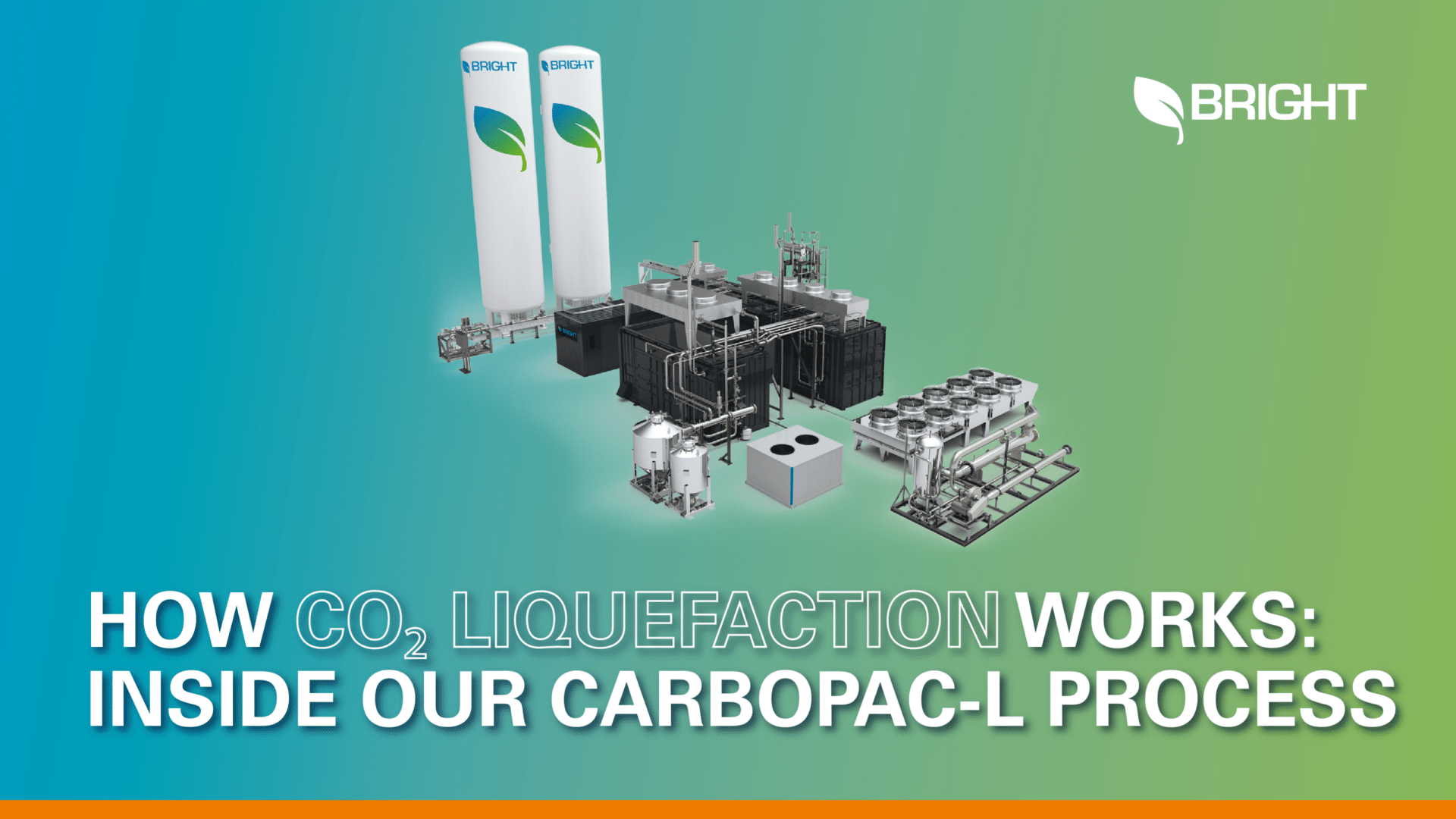
With the right equipment, you can repurpose that second stream of biogenic CO2 as a product you can sell. Our new explainer video shows exactly how Bright's CarboPac-L system does it.
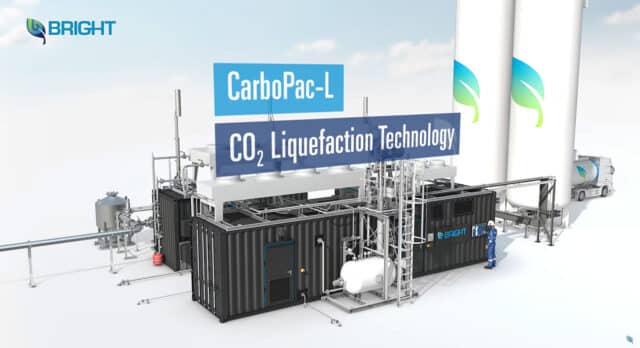
How CO2 Liquefaction Works: From Upgrader Off-Gas to Food-Grade Liquid CO2
Why RNG producers are adding CO2 recovery
A second revenue stream. Liquid CO2 is a commodity with steady demand. Selling it adds income from a stream your plant already produces.
A lower carbon intensity score. Depending on the program and pathway, capturing and using biogenic CO2 instead of venting it can help lower your project’s carbon intensity (CI) score. Under programs such as California’s Low Carbon Fuel Standard, a lower CI score means more valuable credits for every unit of RNG.
Local supply buyers want. Most US merchant CO2 comes from ammonia plants, ethanol plants and natural CO2 wells concentrated in a few regions, and buyers have faced shortages when major sources go offline. RNG plants sit in dairy regions, at landfills and near cities, giving offtakers a closer, more diverse source.
Where liquid bioCO2 goes
Demand is strongest in food and beverage, which is why food-grade quality matters:
- Beverage carbonation
- Meat and poultry processing
- Dry ice for cold chain shipping
- Modified atmosphere packaging
- Greenhouse enrichment
- Water treatment and pH control
Proven at our own plant
At Wabico, HoSt Group’s own RNG plant in the Netherlands, Bright CO2 liquefaction produces liquid bioCO2 at a site that has earned FSSC 22000 food safety certification. Read how Wabico got certified here or learn more about the Wabico project here.
Is CO2 recovery right for your plant?
The business case depends on your CO2 volume, local CO2 prices and access to offtakers. CarboPac-L systems start at [600] kg/hr, about [14] metric tons of liquid CO2 per day, and scale up from there in compact, containerized units.
Planning a new RNG project or adding CO2 recovery to an existing one? Talk to our North America team, or explore CO2 liquefaction solutions.