From Green Bin to RNG: York Region Turns Household Food Waste into RNG and Liquid CO2
Food scraps and yard waste once destined for landfill will instead heat homes, fuel vehicles, and feed the gas grid of the York Region in Ontario, Canada.
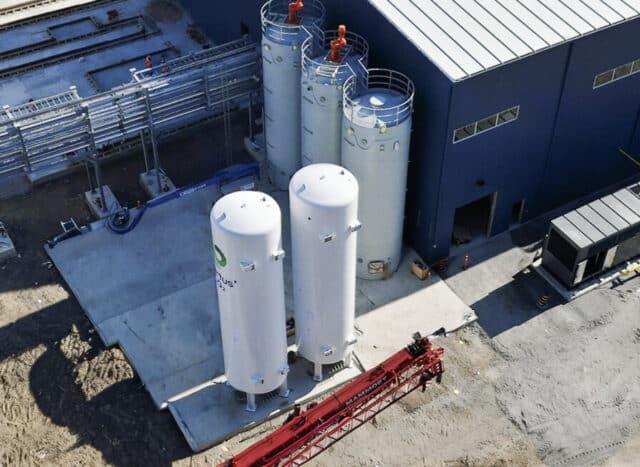
Bright Renewables is supplying biogas upgrading and CO2 liquefaction technology for a new organics processing facility being built by Convertus Group in York Region, Ontario, just north of Toronto. The plant will process up to 200,000 metric tons (about 220,000 short tons) of organic material a year, including household green bin waste, and turn it into two products: renewable natural gas (RNG) and food-grade liquid bioCO2.
Once operating, the facility will produce [10 million Nm3] of RNG per year, roughly [366,000 MMBtu], enough to supply the equivalent of about 5,000 Canadian homes.
Why this matters for US municipalities and haulers
Across North America, food waste is moving out of landfills. California’s SB 1383 requires jurisdictions to divert organic waste, and several Northeastern states restrict sending commercial food waste to landfill. That leaves cities, counties, and haulers with the same question York Region has answered: what do you do with the organics once you’ve collected them?
York’s answer is to treat them as a feedstock rather than a disposal problem. Anaerobic digestion turns food waste into biogas, Bright’s upgrading system refines that biogas into pipeline-quality RNG, and the CO2 that would normally be vented is purified and transformed into a saleable product.
A second life for carbon
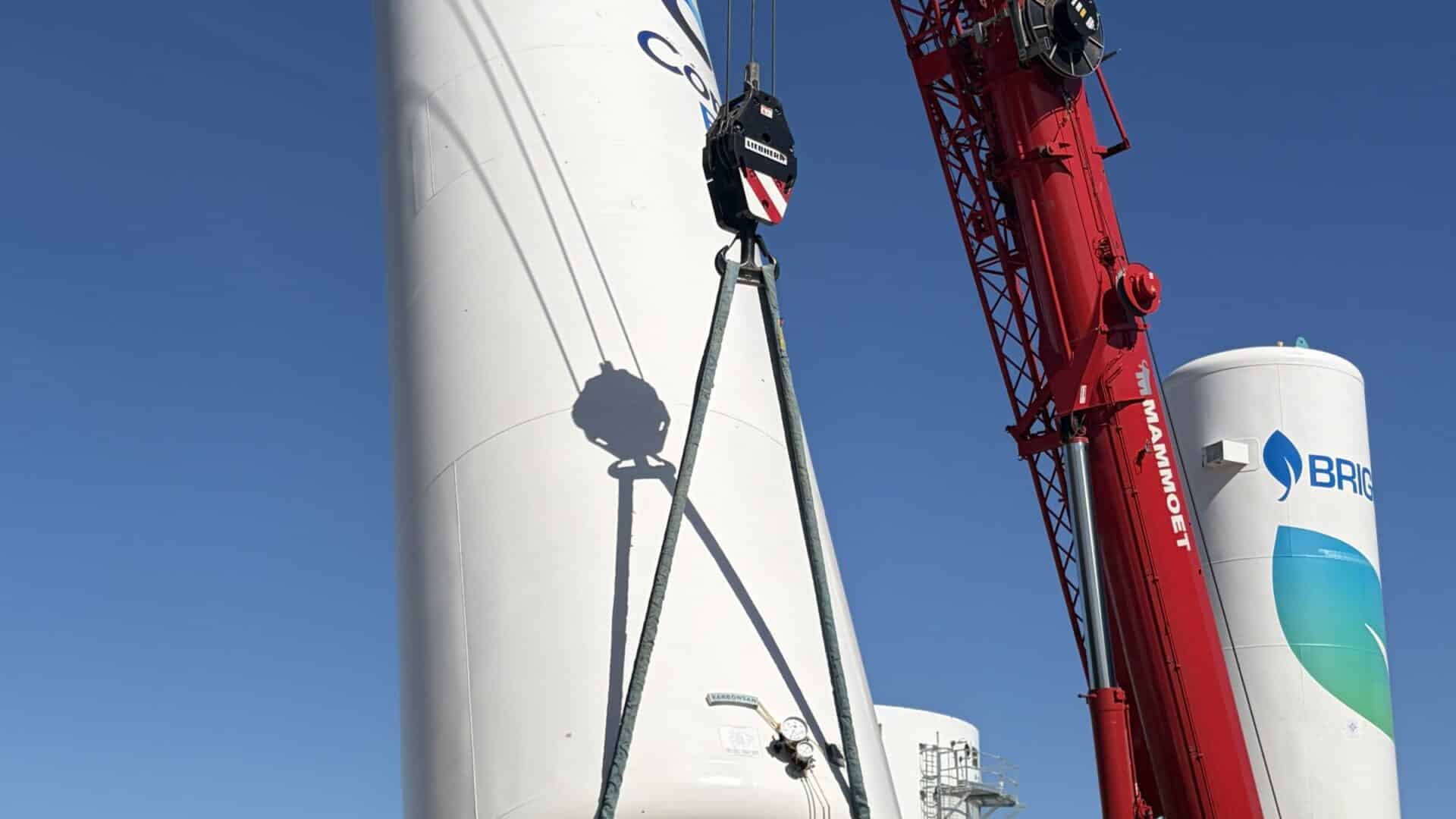
A 2,000 kg/h CO2 liquefaction system (about 48 metric tons per day) will capture the CO2 separated during upgrading and produce [10,000 metric tons] of liquid bioCO2 a year for food and beverage, greenhouse growing, and other uses. The system uses CO2 itself as the refrigerant, so no Freon or ammonia is needed.
“CO2 does not have to be a byproduct we simply release. On a project like York, we recover it, purify it, and turn it into something industries actually buy,” says Jafeth Bulsink, Head of Sales at Bright Renewables. “That shift, treating carbon as part of the product mix rather than a cost to offset, is a big part of where we see the Canadian market heading.”
For producers in both the US and Canada, the same model applies: biogenic CO2 captured at an RNG plant gives local buyers an alternative to fossil CO2 from ammonia and ethanol plants, and adds a revenue stream to the project.
Closing the loop
Food scraps that once went to landfill now become a feedstock, and their energy, carbon and nutrients go back into use instead of being buried.
Household organic waste is processed on site, with residual material converted into certified biofertilizer for growers in the region, while the biogas is upgraded into RNG and bio-CO2. Beyond the environmental case, the project supports local jobs and gives Convertus Group full oversight of gas and CO2 quality in-house, through the integrated control, gas analysis, and instrumentation package we supply, without needing a third party.
That upgrade step runs through a biogas upgrading system we’ve rated at 2,500 Nm3/hr, where a three-stage membrane separates methane from CO2 with minimal losses, a detail that directly determines how much RNG the region gets out of every tonne of waste that comes in.
Curious what a similar setup could look like for your own site? Explore our biogas upgrading and CO2 liquefaction technology, or get in touch with our team to talk through the possibilities for your facility.